The credit squeeze
Musk declares an AI cloud crisis. He’s already borrowed $40 billion
The GPUs are paid for. The buildings aren’t finished. Musk and Chamath Palihapitiya are mapping a shakeout in which the winners are the ones who can still borrow.
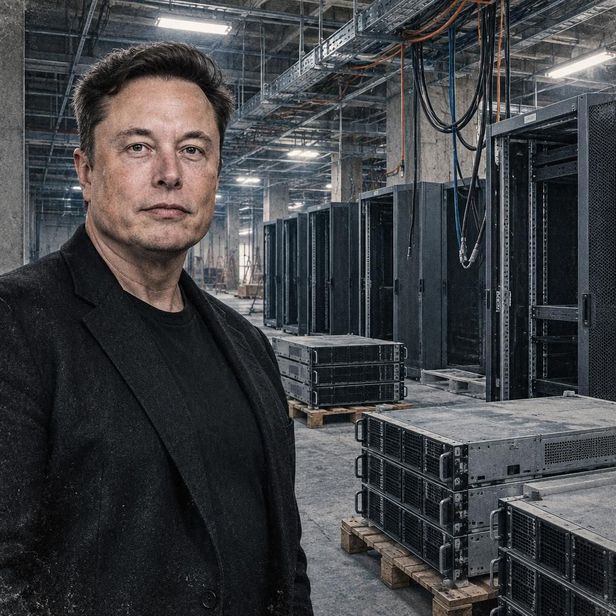
Elon Musk is calling the start of an AI cloud infrastructure crisis. He did it on X, naturally. On October 25, he warned of computing capacity stranded in half-finished data centers, then followed up with the more immediate problem: debt markets have all but stopped lending to companies without substantial revenue outside AI data centers. A wave of stalled projects is still a forecast. The funding squeeze, he says, is already here.
Musk was responding to investor Chamath Palihapitiya, who owns a portfolio of land with access to electricity. His account of the infrastructure business is distinctly unromantic. Neoclouds—the specialist providers of AI computing capacity—are disorganized and short of capital. The big cloud platforms have more money but move at a bureaucratic crawl: three months to sign an NDA, demands for 18-month escrow periods. Faster competitors are securing sites for future construction while the giants are still processing the paperwork.
Palihapitiya expects construction delays to catch the market off guard in 2027. The result would be expensive hardware with nowhere useful to go: accelerators already paid for, sitting in inventory or waiting for a data center to be finished. Other equipment will be running but earning less than its full cost of capital. Idle GPUs and a shortage of usable computing capacity can coexist quite comfortably when the land, power, hardware and financing fail to come together on schedule.
Musk agreed and supplied the financing angle. Over the past few weeks, he said, debt markets have almost entirely shut out companies without significant revenue beyond AI data centers. He promptly explained why that did not include him. SpaceX had closed $40 billion in debt financing for GPUs, he said, citing its investment-grade credit rating and revenue from Starlink and launches. For the 200-plus neoclouds, his outlook was “guppy-level death and consolidation.” Some would survive. Not many.
“SpaceX closed $40B of debt for GPUs, but we’re investment grade and have Starlink & launch revenue.” — Elon Musk
We’ve already written about how the AI future acquired a due date. Musk is describing the next step: lenders deciding who gets to build it. An established business can use existing cash flow to keep a delayed project alive. A specialist cloud provider is borrowing against income from machines it still needs to install and put to work. Once the next loan falls through, an unfinished data center can quickly go from a promise of future revenue to the reason nobody will lend any more.
Model developers get a bill of their own. Palihapitiya expects hyperscalers facing capacity shortages to serve their internal computing needs first. Outside model companies would be directed through the cloud provider’s model router, an intermediary that routes requests and takes a cut. That would tighten independent developers’ dependence on their infrastructure supplier, giving it control over access to computing capacity and an additional share of the money generated by its use.
Conveniently, both men’s accounts of the coming shakeout leave room for some familiar winners. Palihapitiya favors large operators that can build quickly and well-capitalized, nimble suppliers serving them—a description that suits his own portfolio of powered sites rather nicely. Musk is forecasting his competitors’ extinction while advertising his own access to credit. That is part of the story: major players are already making the public case for why the coming consolidation should work in their favor.
This is how an infrastructure crisis begins: the equipment has been bought, the buildings are unfinished and the next loan is unavailable. Growing demand for AI cannot necessarily save a company whose bills come due before it can serve that demand. Palihapitiya expects 2027 to flush out bad bets and concentrate ownership. The computing assets will remain after the shakeout. They may simply belong to someone else—someone who can still borrow.
Imagerly.Ai · No. 28 · October 2026