The Musk portfolio
Musk is bundling his empire. The baggage comes too
SpaceX brings fast growth and a vast AI bill. Tesla brings stalled sales and a trillion-dollar price tag. Musk stands to collect $70 billion for putting them together.
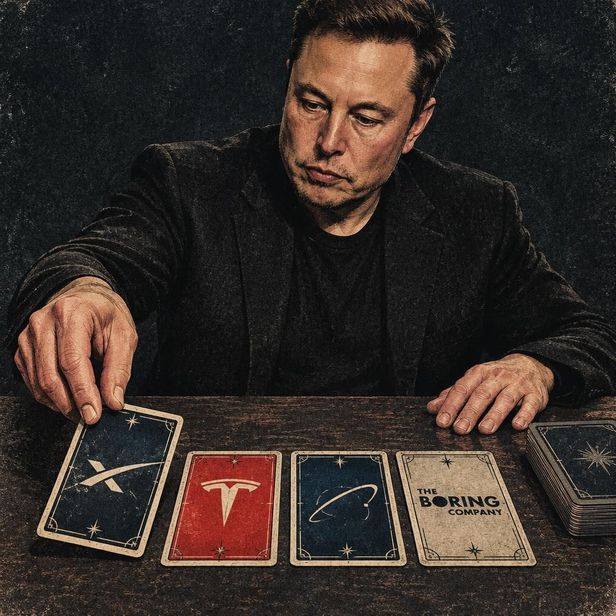
Elon Musk wants investors to put one price on more of his empire. SpaceX, with a market value of roughly $2 trillion, is exploring a takeover of Tesla, valued at about $1.5 trillion. Both companies have formed special committees to examine a combination, according to Forbes. The terms remain unresolved, but the ambition is clear: give investors a single stock through which to buy several versions of Musk’s promised future.
For Musk himself, the benefits are already easier to calculate than the synergies. Forbes estimates that a change of control could accelerate the vesting of roughly 286 million restricted Tesla shares, worth around $70 billion after taxes. Investors would have to wait to see what the businesses could achieve together. Their founder could collect a substantial reward simply for bringing them together. Other shareholders would inherit a less straightforward package, with each company’s weaknesses bundled alongside its strengths.
SpaceX has plenty to put in the sales pitch. As we recently reported, quarterly revenue rose 161% to $14.6 billion, with its AI division accounting for more than half of sales. Starlink remains the main source of operating profit. But capital expenditure reached $19.6 billion in the same quarter, including $16.4 billion for AI. Investors buying that growth also take on the enormous cost of sustaining it.
The financial connections already reach well beyond rockets. SpaceX booked a $561 million gain on its stake in Musk’s tunneling venture, The Boring Company, CNBC reports. A new funding round raised the value of the holding, lifting SpaceX’s reported earnings without the company selling its stake or receiving any cash from a sale. A higher price for the tunnel business improved the rocket company’s bottom line. That is the Musk portfolio at work—and a falling valuation could transmit trouble along the same route.
Tesla would bring stalled sales growth to the package. Its third-quarter revenue came to $28.05 billion, down about 0.2% from a year earlier: essentially flat, with automotive revenue declining. That is awkward baggage for a company worth well over a trillion dollars. Investors are still paying handsomely for its future while its current business struggles to grow.
“Automotive revenue fell 3% from a year earlier.” — CNBC
Over the past month, Tesla’s stock has barely moved. It closed October 23 at $372.22, up just 0.03% over the month. The earnings release did trigger a decline of roughly 3%, so there was an immediate market reaction. It simply did not amount to a wholesale reassessment of the business over that longer window. Flat sales have proved compatible with a largely unchanged valuation. Musk’s next act still commands a premium.
A merger would let him sell those future chapters as a single volume. SpaceX’s rapid growth could help carry Tesla’s story; Starlink’s profits would sit alongside vast AI spending; gains on investment stakes could polish the combined earnings. The market would also get stagnant sales, heavy capital requirements and earnings exposed to changes in other companies’ valuations. One share price would make those problems common property among shareholders who previously owned separate businesses. Adding market caps is easier than getting every company to grow.
Imagerly.Ai · No. 27 · October 2026