The economics of AI
Eight Years at Full Tilt. Someone Tell the GPUs
Cheap inference needs years of hard work from expensive chips. Hyperscalers have put those years in the spreadsheet before the hardware has lived them.
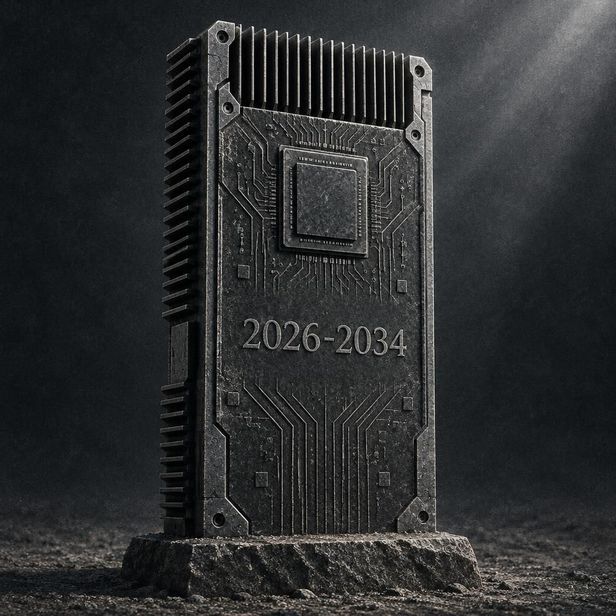
AI hyperscalers are making a bold engineering bet: expensive Nvidia accelerators will run at close to 100% utilization for years and earn back the money spent on them. Expected service lives have stretched from three years to five or six, with seven or eight now under discussion. Those extra years transform the financial model. The latest chip generations have one obvious limitation: they haven’t existed that long.
Depreciation schedules have already been getting longer. Alphabet raised its estimated server life from three years to four in 2021, then to six in 2023. CoreWeave extended the estimated life of its data-center computing equipment from five years to six, also in 2023. These asset categories cover more than GPUs, but the direction is clear. Lambda’s Matt Rowe described the next step: “We all think seven to eight years is possible.” Those potential extra years are already helping make today’s case for returns.
The optimists have a substantive argument: older accelerators still have buyers. Residual-value estimates depend on purchase-price assumptions and equipment age, but the market plainly sees value in previous generations well beyond a short depreciation schedule. A working older GPU can still earn its keep. What someone will pay for it today says little about the condition it will be in after several more years of nonstop use.
Experience with conventional servers only takes the argument so far. No one can produce a five- or eight-year operating history for a chip generation younger than that. A study of A100s and H100s in the Delta system analyzed 11.7 million GPU-hours in a dataset spanning 2.5 years. That is substantial field evidence on errors and reliability. Millions of hours accumulated across devices running in parallel still cannot reveal how a particular generation behaves in its seventh year. Watching more cards at once does not make any of them older.
The operating data already show that keeping these fleets running is a business expense in its own right. During a 54-day window of Llama 3 405B training on 16,384 H100s, Meta recorded 419 unexpected interruptions: 148 attributed to faulty GPUs and another 72 to HBM3 memory. Those figures cannot establish a date when accelerators start dying en masse. A job interruption and a permanently failed card are different events. They do, however, entail real spending on diagnostics, replacements, spare capacity and recovery. Inference allows failures to be contained differently from a single enormous training run. Someone still pays for maintenance and backup hardware.
Long service lives are especially important to the promise of cheap inference—answering requests with already-trained models. An accelerator’s purchase cost is spread across its useful operating hours. Budget for eight years and get only four at the same utilization, and the capital cost per useful hour doubles. Electricity, cooling, networking, maintenance and financing still come on top. Idle capacity leaves fewer productive hours over which to recover the original bill. Extending a depreciation schedule improves reported earnings immediately. The extra years of revenue still have to materialize.
“We all think seven to eight years is possible.” — Matt Rowe, Lambda
We’ve written before about a data center’s two clocks: the building can last for decades while its computing equipment loses its competitive edge much sooner. There is a third clock, too: how long the accelerators physically last. The industry has a tidy plan for handing down older chips. Frontier training moves to the next generation; the previous one keeps answering requests. For that arrangement to work, the older hardware has to stay operational without repairs and replacements swallowing the returns.
If the bet on long service under heavy load fails, the consequences will reach far beyond the maintenance department. Operators will need to buy replacements sooner, revise asset values and raise money before the previous fleet has paid for itself. Hardware pledged as loan collateral creates another point of exposure. Inference providers may have to raise prices, accept thinner margins or ask investors to cover the difference again. A bad lifespan assumption, repeated across a buildout this large, puts the economics of inference worldwide at risk.
The economics of longer depreciation schedules increasingly depend on years of reliable service that the newest accelerators have yet to demonstrate. Their confidence is growing faster than the hardware is aging. The financial models already have eight years of service penciled in. The chips still have to deliver.
Imagerly.Ai · No. 22 · October 2026