The overhead of altruism
Saving Humanity Comes With a $4 Million Security Bill
Anthropic’s founders have pledged most of their equity to charity. Until the billions arrive, the bodyguards are on the clock.
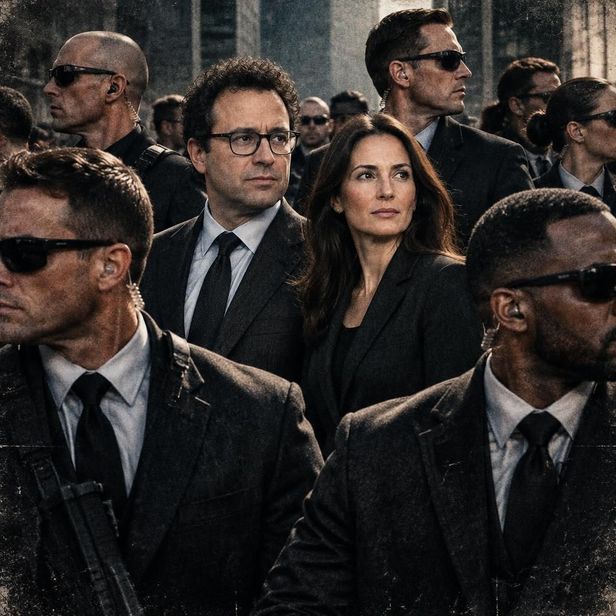
Saving humanity has running costs. Anthropic’s IPO filing reveals that the company behind Claude spent about $4.1 million protecting CEO Dario Amodei and President Daniela Amodei in 2025. Bloomberg puts that at roughly 30 times the median executive-security spending among S&P 500 companies, about $136,000. The effectiveness of altruism remains tricky to measure. The cost of protecting the altruists is now available to investors.
There are bigger budgets in the executive-protection business: $23.7 million at Meta, $13.5 million at Blackstone. Anthropic has room to grow. At a financial firm, the assignment is straightforward: protect the people who manage the money. Anthropic’s leadership claims a more consequential role in getting humanity through the AI revolution in one piece. That adds a certain moral weight to the bodyguard’s shift: make sure the future of civilization gets to the car.
Bloomberg reports that Anthropic is stepping up protection for executives and staff as the backlash against AI grows. Daniela’s package covers personal protection, home security and transportation; the company separately disclosed $97,000 for Dario’s security-related private flights. The same prospectus warns of “catastrophic or existential risks to humanity” from the technology Anthropic is developing. Investors are getting an unusually comprehensive account of the risks: everything from the possible end of humanity to the precautions required for the CEO’s travel arrangements.
“catastrophic or existential risks to humanity” — Anthropic’s IPO prospectus, quoted by Fortune
Effective altruism began with an appealing question: how can each dollar do the most good? Around Anthropic, that question now supports an extensive network of institutions, investments and family connections. Dario says he does not consider himself part of the movement. Daniela is married to Holden Karnofsky, co-founder of GiveWell and Open Philanthropy, and the company’s personal and financial ties to this world have become a story in their own right. Dropping the label is easy enough. Relatives, old friends and prospective recipients of donations are harder to disentangle.
All of Anthropic’s co-founders have also pledged 80% of their personal equity in the company to philanthropy. Here the satire starts writing its own investment memo. Someone planning to give away billions can make a respectable case that keeping them safe serves the public interest. The spreadsheet practically builds itself: how much expected benefit to humanity does one more guard outside the house buy? Put a sufficiently high value on the eventual donation and even private flights start to look like modest overhead for a charitable undertaking.
We have covered the contingency planning in this circle before. Some early Anthropic employees considered buying land in remote parts of the United States in case AI went wrong. Former employees also recalled discussions about developing AI at a secure desert facility, along the lines of the Manhattan Project. Now there is a concrete executive-security bill to add to the story. The promised future has yet to arrive, but we are learning plenty about the personal arrangements being made along the way.
The payment schedule is the clever part. The benefits of superintelligence, the billions for charity and the happy generations all lie ahead, and all remain uncertain. Home security, escorts and safe transportation are needed now. Each step toward the glorious future brings fresh details about how the people leading us there need to live. The first reliably functioning service of the age of universal prosperity turns out to be personal protection for the people promising it.
Imagerly.Ai · No. 33 · October 2026