Language
The Chatbot Has Left the Chat
Your internal editor did an internship at ChatGPT. Now every platitude is an insight, every meeting a reset, and even the rough edges come factory-fitted.
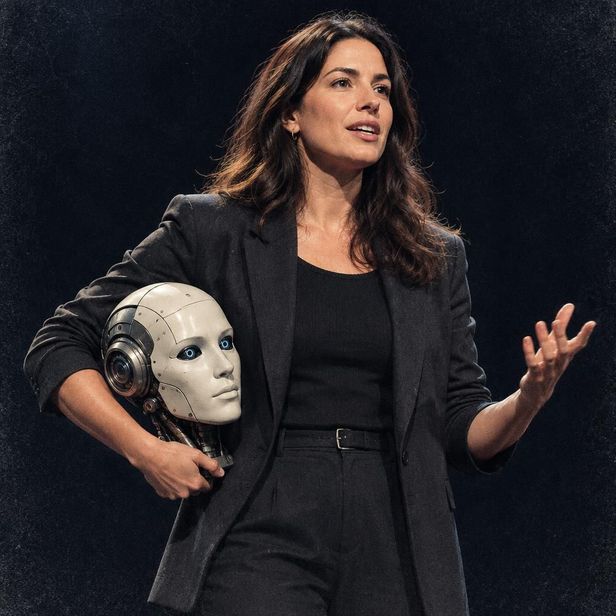
People who spend their days with ChatGPT, Claude and other chatbots are catching familiar verbal habits coming out of their own mouths. The phrases turn up in meetings, messages and ordinary conversations, with no assistant involved. The Wall Street Journal calls it “prompt speak.” The chatbot has left the chat. It can now attend the meeting without a laptop.
One of the people interviewed caught herself opening a work meeting with: “This is not a morning meeting, it’s a reset.” Presumably everyone should have received a firmware update with the calendar invitation. The meeting itself remained stubbornly a meeting. “We just sound like bots,” she says. She had consumed so much AI-generated material that its stock phrases were starting to come out in her own conversations.
These rhetorical devices predate chatbots by centuries. Using them to sniff out AI is about as useful as inspecting someone’s dashes and quotation marks for signs of machine possession. Ask a typesetter: correct punctuation exists, and so does automatic formatting. The point of interest is the way a contrast can become a ceremonial renaming that adds no information. “It’s not a door, it’s a portal to another world.” Still a door, now wearing a cape. “It’s not coffee, it’s a moment for yourself.” “It’s not a stairwell, it’s a space with character.” The stairwell still smells like a stairwell, but the sentence is ready for the investor deck.
So this particular irritation turns out not to be mine alone. By the third verbal somersault, a living writer starts to sound as though a branding agency is holding them hostage. The prose sounds slightly cleverer than the thought behind it, with the polish of an editorial process that never happened. Chatbots supply this packaging wholesale. Read enough of it and the packaging starts to look like the standard for a good thought.
The WSJ report points to a route of AI influence that gets overlooked in arguments about generated articles, books and emails. Someone can write every word themselves and still bring the chatbot’s rhythm along: the pre-emptive agreement, the neatly arranged points, the mandatory conclusion that sends everyone home feeling validated. Reading model responses and using them to edit your work is enough to acquire the habit. An AI detector has nothing to investigate. The author did the typing. Their internal editor just did an internship at ChatGPT.
“We just sound like bots” — Sara Wimmercranz, quoted in The Wall Street Journal
This voice has an obvious advantage, especially in corporate prose: it lets you sound competent before you’ve acquired any competence. Doubt arrives properly dressed. A platitude gets promoted to an insight. An objection is greeted with something that sounds like the opening of a customer-support session. Ordinary conversation begins to resemble an email that has been sent back three times with instructions to make it “warmer, but still professional,” then fitted with every requisite politically correct disclaimer. It’s convenient, which is why it sticks. The courtesies multiply while the substance quietly goes off.
One plausible human response is to cultivate rough edges: broken sentences, loose ends, no tidy bow on the conclusion. We could get an arthouse style of writing in which awkwardness serves as proof that a person was here. Cinema has been through this already. Hollywood learned to sell handheld camerawork, grain and uncomfortable silences. The next move is easy to imagine: order some distressed humanity from the model. It will dutifully supply two unfinished thoughts and one precisely measured bit of rudeness. Premium authenticity. Preferences saved. Some newer models already arrive with their em-dash habit all but amputated.
The machine in the WSJ story didn’t need to write a great novel to leave a mark on culture. Being available all day was enough to start taking over as the editor of human speech. Along with the stock phrases comes a habit of presenting the mundane as a beautifully packaged revelation. So the morning meeting is now a reset. Calling it a meeting would be like admitting the door is just a door.
Imagerly.Ai · No. 08 · October 2026