Spaceflight
Starship reaches orbit for the first time on Flight 14
Twenty-six Starlink V3 satellites reached orbit, and both stages returned to Earth.
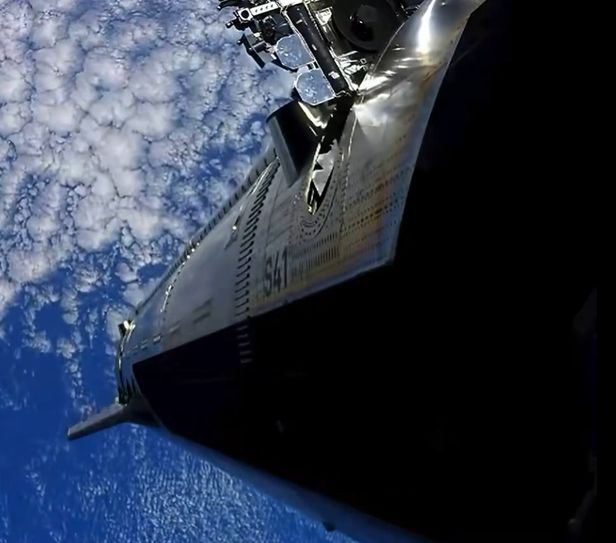
Starship Flight 14 has given SpaceX a milestone its previous 13 tests never reached: a closed orbit around Earth. On September 28, Ship 41 went beyond a suborbital test flight, deployed a payload and returned to Earth.
Super Heavy Booster 21 lifted off from Pad 2 at Starbase and separated from Ship 41 during hot staging. About 25 minutes after launch, the ship fired its engine again to enter an orbit roughly 275 kilometers above Earth. It then opened its payload bay and deployed 26 Starlink V3 satellites, with deployment beginning about 34 minutes after liftoff. This was Starship’s first flight carrying satellites to orbit.
Booster 21 completed its return over the Gulf of Mexico, though fewer engines relit than intended for its boostback and landing burns. One of Ship 41’s vacuum Raptor engines failed during ascent, prompting an early end to the flight. The satellites were already deployed when the ship began its deorbit burn about 2 hours and 12 minutes after launch, before completing the planned roughly six orbits.
It survived reentry and made a controlled splashdown in the Pacific 3 hours and 8 minutes after launch, well short of the planned nearly 10 hours.
It would take 10 Falcon 9 launches (277 V2 satellites) to add that same amount of capacity.
That shorter flight and the booster’s engine trouble matter. So does the result: Starship reached a closed orbit and deployed real satellites. The next test is whether SpaceX can do it routinely enough to make Starship a workhorse for Starlink V3. Sawyer Merritt estimates that one such launch could add as much network capacity as 10 Falcon 9 launches, potentially increasing Starlink’s total capacity by 3%.
Imagerly.Ai · No. 05 · September 2026