Trust, on display
The AI Alignment People Actually Want Is a Person Who Looks in Control
A reported attendant at the front of a driverless train offers an uncomfortable lesson: visible oversight can feel more convincing than an explanation of how a system works.
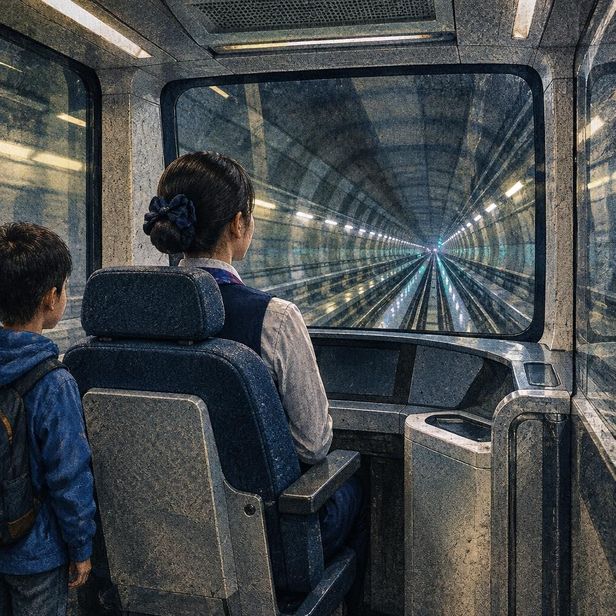
Posts about Chengdu’s driverless metro describe an attendant seated at the front window of a Line 13 train. The train drives itself; the person faces forward and, according to the viral account, is there to reassure passengers. It is a striking image. It is also a claim about the attendant’s role from social media, not a verified operating procedure.
And maybe it is the most honest picture of alignment most people will ever get. Not “the system shares our values.” Not “we have ruled out dangerous internal goals.” Just a human being placed next to an autonomous machine, looking as though someone is in charge.
We talk about AI alignment as if the only question is what the system will do when nobody is watching. Users encounter a different test: does it sound calm, refuse at the right moment, add a warning, offer a human to contact? None of those cues proves the system is safe. All of them make safety easier to recognize—or easier to mistake for a performance.
The passenger does not see the safety case. The passenger sees a person looking out the window. If the train goes somewhere unexpected, that person is also someone to ask: What are you doing here? A visible human gives anxiety an address, even when the machinery of control is elsewhere.
The passenger does not see the safety case. The passenger sees a person looking out the window.
That distinction matters. Chengdu’s fully automated operation is documented; the attendant’s reassuring role comes from viral posts. A claim that the person has an emergency stop button is not verified, and the same account says there are no buttons at the seat. A body at the front window should not be confused with a hand on the controls.
This may be the mass-market version of AI alignment: not an angel on the model’s shoulder, but a human-shaped sign that says someone is here. If that person can actually intervene, tell us how. If they cannot, call it what it is: not human-in-the-loop, but human-for-the-vibes.
Imagerly.Ai · No. 01 · September 2026