MATHEMATICS / PROVENANCE
The Next AI Breakthrough Will Need a Chain of Custody
OpenAI’s mathematical claims have raised a question that checking a proof alone cannot settle: how can researchers account for the ideas an AI assistant might have encountered?
OpenAI’s announcement of a result concerning Navier–Stokes invited the familiar mathematical question: does the argument hold up? Independent acceptance of the claimed result has not been established. But the announcement also exposed a question that would remain even if an argument were sound. What could the system have learned before it produced it?
A separate dispute around Astra makes that question concrete. Mathematician Andreas Thom has raised the possibility that private ChatGPT conversations about unpublished work with Gábor Kun influenced the system. That is a suspicion, not evidence that those conversations entered Astra’s training data. The argument concerning non-sofic groups also draws on earlier published results by Kun and by Kun and Thom. Those published sources matter; they do not, on their own, resolve the question about private conversations.
OpenAI’s stated policy allows content from individual users of its services to be used to improve models, with an opt-out. Training data sharing is on by default in personal ChatGPT Free, Plus, and Pro workspaces; Business, Enterprise, Edu, and API inputs and outputs are not used for training by default. None of this shows that a particular conversation was used. It does explain why researchers might ask for more than an assurance when they are trying to reconstruct an idea’s path.
The difficult scenario is indirect. A private exchange could, in principle, be de-identified and contribute to later model improvement; an assistant might then produce a useful step without anyone intentionally retrieving the original exchange. This is a possible mechanism, not an established account of Astra. Without records connecting a particular conversation, training process, and output, resemblance alone cannot prove the route an idea took.
That distinction changes what scrutiny of AI-assisted work may require. Authors can present a proof and cite published predecessors, yet still be unable to say precisely what an assistant brought into the room. A proof certificate can check an argument. It cannot establish where an idea came from. Where priority is contested, relevant records might include access histories, privacy settings, timestamps, and an account of the assistant’s role—but those records will not always exist or settle the question.
A proof certificate can check an argument. It cannot establish where an idea came from.
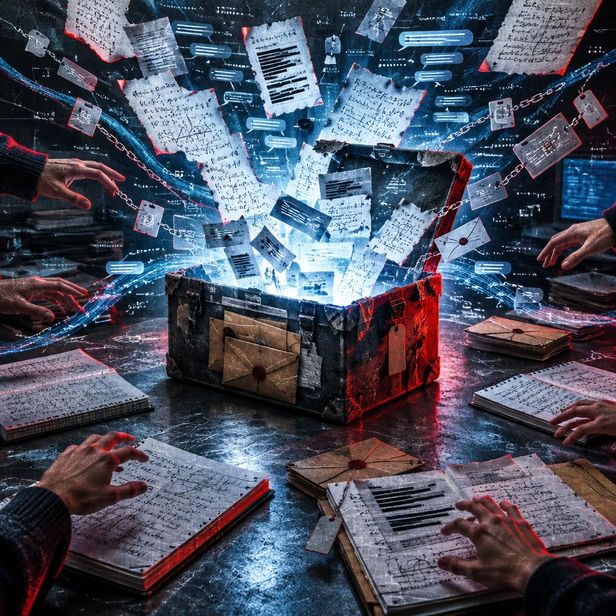
Thom’s suspicion may be wrong in this case. The larger problem does not depend on it being right. By making public claims of mathematical breakthroughs in an environment where a model’s informational history is hard to audit, OpenAI has opened a box it cannot close with another demonstration of correctness. Future AI-assisted discoveries may need two accounts: why the result works, and why its authors can claim it as theirs.
Imagerly.Ai · No. 01 · September 2026