The price of succession
Nvidia’s half-trillion-dollar breakup with Huang
Colette Kress takes interim command as analysts slash their targets. Nvidia’s board needs a permanent successor—and investors are already heading for the exits.
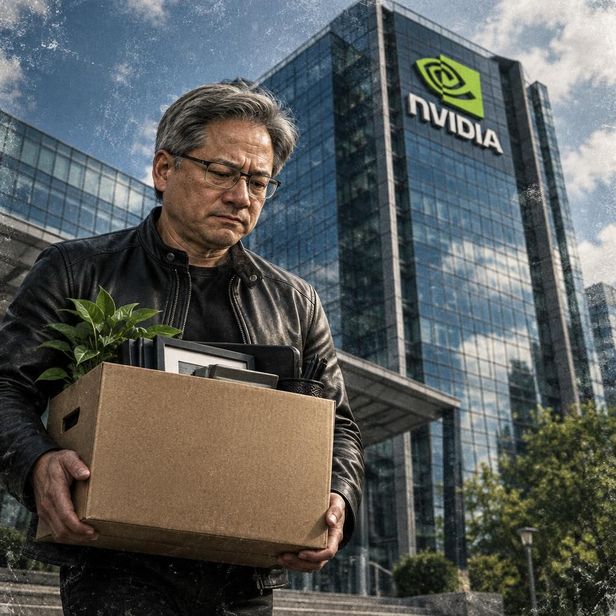
Nvidia’s first trading day without Jensen Huang began with an interim CEO and a spectacular sell-off. On November 12, 2026, the company announced that its co-founder had resigned as president, chief executive and a board member, effective immediately. Shares plunged 13% at the open, wiping out more than half a trillion dollars in market value, according to the Financial Times. That leather jacket turns out to have been carrying quite a valuation.
Just days earlier, the board had promised an independent investigation with Huang remaining at the helm. The investigation continues; his tenure is over. We’ve traced how the CEO’s private life became a corporate and geopolitical scandal: his admission of infidelity, reports of a relationship with businesswoman Alice Huang, whom US intelligence officials reportedly believed had ties to Chinese intelligence, and then a New York Times report alleging an affair with his subordinate Kimberly Powell. A shareholder lawsuit and questions from Congress followed. Now the scandal has cost Nvidia its chief executive.
Chief Financial Officer Colette Kress is taking over as interim CEO while keeping her finance role. The board is looking both inside and outside Nvidia for a permanent replacement. Board chair Harvey Jones expressed confidence in Kress and the leadership team, saying operations, customer commitments and the product roadmap would continue without interruption. Customers needed that assurance. Judging by the opening sell-off, investors needed more.
A Reuters analysis published on November 12 identified two internal candidates attracting attention from analysts and investors: Kress and Ian Buck, one of Nvidia’s leading technical executives. Arm CEO Rene Haas was among the outside possibilities being discussed. These names reflect speculation among people speaking to the press; Nvidia has announced no shortlist. Huang had never publicly named a successor. The board now has to choose someone to lead the company for years while investors are heading for the exits.
“The Board has full confidence in Colette and the leadership team, and we expect the company's operations, customer commitments and product roadmap to continue without interruption.” — Harvey Jones, Nvidia board chair
Wall Street was already revising its recommendations before the resignation became official. At least six analysts downgraded Nvidia between Wednesday evening and Thursday morning, CNBC reported. Bernstein cut its rating from Outperform to Market Perform and halved its price target from $400 to $200. Melius Research moved from Buy to Hold, lowering its target from $315 to $185. Evercore ISI downgraded the stock to In Line with a $186 target. Those were revisions to analysts’ expectations. The market was delivering its own verdict, considerably faster.
The explanations show how much risk comes with depending on a founder. KeyBanc, which cut Nvidia from Overweight to Sector Weight, explicitly cited greater strategic, organizational and operational risk if Huang departed. Bernstein still described the underlying business as strong. Melius called the shares exceptionally cheap relative to expected earnings next year—and withdrew its Buy recommendation anyway. A bargain valuation was not enough to offset the prospect of further revelations and uncertainty over who would take charge.
The timing is particularly awkward for the AI industry. As we reported on its borrowing boom, AI-related issuers had sold roughly $410 billion in dollar-denominated bonds by October 16, according to Dealogic and Goldman Sachs Global Investment Research. The promised demand lies in the future; the debt obligations already exist. Who runs the leading supplier of AI accelerators therefore matters well beyond Nvidia’s shareholders. Chip buyers and the institutions financing their purchases have a stake in the answer.
Kress has to steer Nvidia through the immediate crisis. The permanent successor will have to show that the company can keep moving at speed without the man who set its strategy for decades. The chips, software ecosystem and customers are still there. But the market has put a separate price on a management structure that concentrated so much trust in one person. More than half a trillion dollars gone at the opening bell is an expensive way to discover how well the board had prepared for his departure.
Imagerly.Ai · No. 43 · November 2026