The cost of the buildout
AI’s debt boom: sellers before tenants
The computing future needs rent checks. Rising yields, projects without tenants and lenders reaching their limits are starting to decide who can afford to build it—and who will inherit the assets.
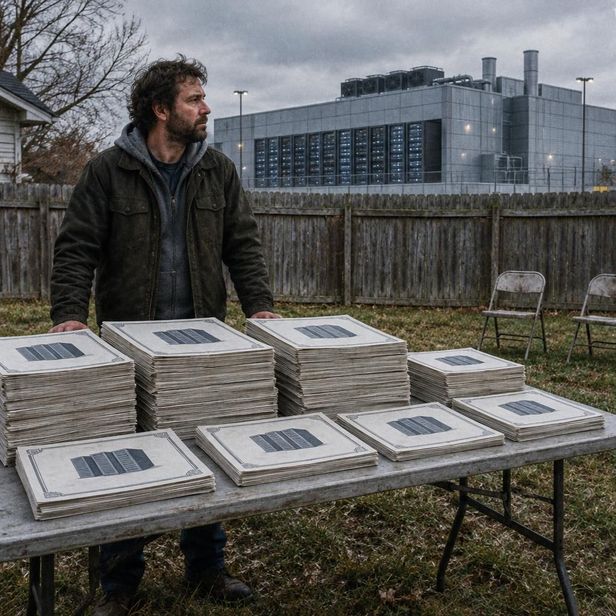
Hedge funds have been dumping debt tied to the AI infrastructure buildout, Andrzej Skiba, head of BlueBay US fixed income at RBC Global Asset Management, told Bloomberg on November 5. He described weeks of heavy selling and positions being unwound as capitulation. Some of the investors financing the promised age of abundant computing have apparently lost their appetite for waiting for it to pay off.
That same day, Bloomberg reported that the Bank of England was questioning data-center lenders about projects financed before a tenant has agreed to sign a lease. In property finance, this is called speculative development: build first, find someone to pay the rent later. It is a particularly revealing arrangement for the AI boom. Demand for computing is practically limitless in the pitch deck; the loan file may still be missing an actual customer.
We have already examined the AI boom’s growing dependence on debt. According to Dealogic and Goldman Sachs, AI-related issuers sold roughly $410 billion in dollar-denominated bonds between the start of 2026 and October 16, compared with about $210 billion in all of 2025. Those are gross issuance figures, including refinancing. The latest developments mark the next stage: a vast supply of debt needs buyers, and those buyers want more compensation for the risk.
The price is already changing. Bloomberg reports that at least 18 data-center financings across high-yield bond and leveraged-loan markets carry double-digit yields. Banks had to sweeten the terms and push the yield above 11% to place a $5 billion loan for AI cloud operator Volta. Even yields on top-rated data-center bonds have climbed from below 5% at the start of the year to nearly 7%. New projects and borrowers seeking to refinance face substantially more expensive money.
A project without a tenant is especially exposed when financing tightens. Interest keeps accruing, power connections and permits can be delayed, and no lease yet guarantees rental income. A longer search for a customer means more capital is needed. By then, lenders may demand a larger equity contribution from the developer and take a dimmer view of the property’s future value. A project that penciled out with cheap debt and a quick lease-up can stop making financial sense before the servers are even switched on.
Analysts see several ways the trouble could spread. Moody’s warns that weaker borrowers could struggle to refinance as loans mature over the next few years. It also flags the interdependence of companies that invest in one another, lend to one another and buy one another’s services. UBS argues that investors should assess the whole network of counterparties: a struggling AI lab could leave cloud operators and data centers exposed if they were counting on its payments. A portfolio of different borrowers can turn out to be several bets on the same end customer.
“AI exposure should be analyzed not only at the issuer level but at the network level.” — UBS
Blackstone President Jon Gray has already spelled out the practical response: the AI buildout will need more equity financing. Lenders are accumulating too much exposure to the sector and to individual companies. Their upside is capped by the loan terms; their losses depend on how badly the underlying assumptions fail. Developers asked to put in more equity face a choice: accept a lower return on their capital, bring in new co-owners or drop some projects. Relying on lenders to bankroll the race is becoming an expensive habit.
Debt selloffs put pressure on market prices and raise the yields buyers demand on new deals. More expensive capital leaves fewer projects worth building. Construction delays then hit equipment orders and disrupt customers’ plans for computing capacity. In a severe downturn, restructurings and defaults would spread losses among project owners, banks, credit funds and bondholders. Slower-than-budgeted occupancy, disappointing rents or an inability to secure the next loan can be enough to start that chain.
AI infrastructure could follow a familiar path for capital-intensive booms: the assets survive, but ownership changes. Useful computing capacity can keep operating even if the companies that built it cannot meet their debt payments. Buyers with access to capital get finished facilities for less than they originally cost. Technological progress is perfectly compatible with bankruptcy for those who financed it. The market is starting to decide who gets the assets and who takes the losses.
Imagerly.Ai · No. 38 · November 2026